Small kitchen Extension Ideas: From Cramped to Culinary Haven – Before and After Transformations
The kitchen, often the heart of the home, can quickly become a source of frustration when space is limited. A small kitchen can feel cramped, hindering cooking creativity and social gatherings. However, a well-planned extension, even a modest one, can dramatically transform this vital space. This article explores a range of small kitchen extension ideas, showcasing remarkable “before and after” transformations that prove size isn’t everything.
Understanding the Need for Expansion
Before diving into specific designs, it’s crucial to understand why a small kitchen extension is often a worthwhile investment. Common motivations include:
Kitchen extensions: Before and after – Blog
Increased Functionality: Creating dedicated zones for cooking, dining, and storage.
Enhanced Natural Light: Bringing in more sunlight to brighten the space.
Improved Flow: Creating a more open and connected living area.
Increased Property Value: Adding valuable square footage and modern amenities.
Social Hub Creation: Making the kitchen a more inviting space for family and friends.
Planning Your Small Kitchen Extension: Key Considerations
Successful extensions require meticulous planning. Here’s a breakdown of essential factors:
Budget: Determine a realistic budget and factor in potential unforeseen costs.
Planning Permissions: Research local building regulations and obtain necessary permits.
Design and Layout: Carefully consider the layout to maximize space and functionality.
Materials and Finishes: Choose durable, aesthetically pleasing materials that complement your existing home.
Contractors: Select reputable and experienced contractors for the project.
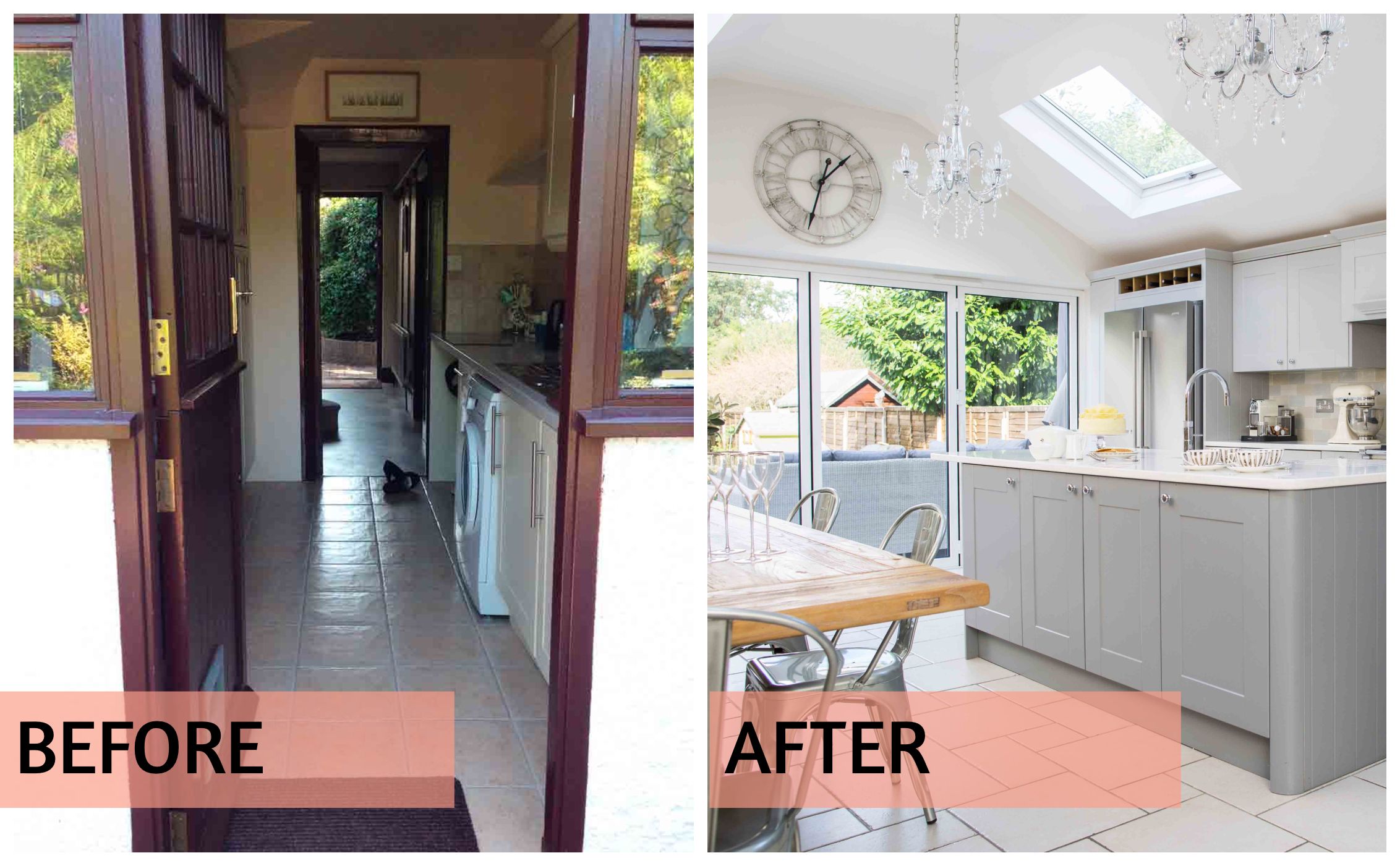
Small Galley Kitchen Renovated Into Spacious Kitchen and Dining Room
Small Kitchen Extension Ideas: Design Inspiration
Let’s explore various extension designs, highlighting their “before and after” potential:
1. The Side Return Extension: Maximizing Narrow Spaces
Many older homes have narrow side passages that are often underutilized. A side return extension involves building into this space, creating a wider and more functional kitchen.
Before: A long, narrow galley kitchen with limited counter space and poor natural light.
After: A wider kitchen with a dedicated cooking zone, a breakfast bar, and large windows or skylights. This design often creates a seamless transition between the kitchen and dining area.
Key Feature: Skylights are essential for maximizing natural light in these often shaded areas.
2. The Rear Extension: Expanding Towards the Garden
A rear extension extends the kitchen outwards into the garden, creating a larger, more open-plan space.
Before: A small, cramped kitchen with limited access to the garden.
After: A spacious kitchen with direct access to the garden through bi-fold or sliding doors, creating a seamless indoor-outdoor living experience. This design can also incorporate a dining area or a family room.
Key Feature: Large glass doors are crucial for maximizing natural light and creating a connection with the outdoors.
3. The Wrap-Around Extension: Combining Side and Rear
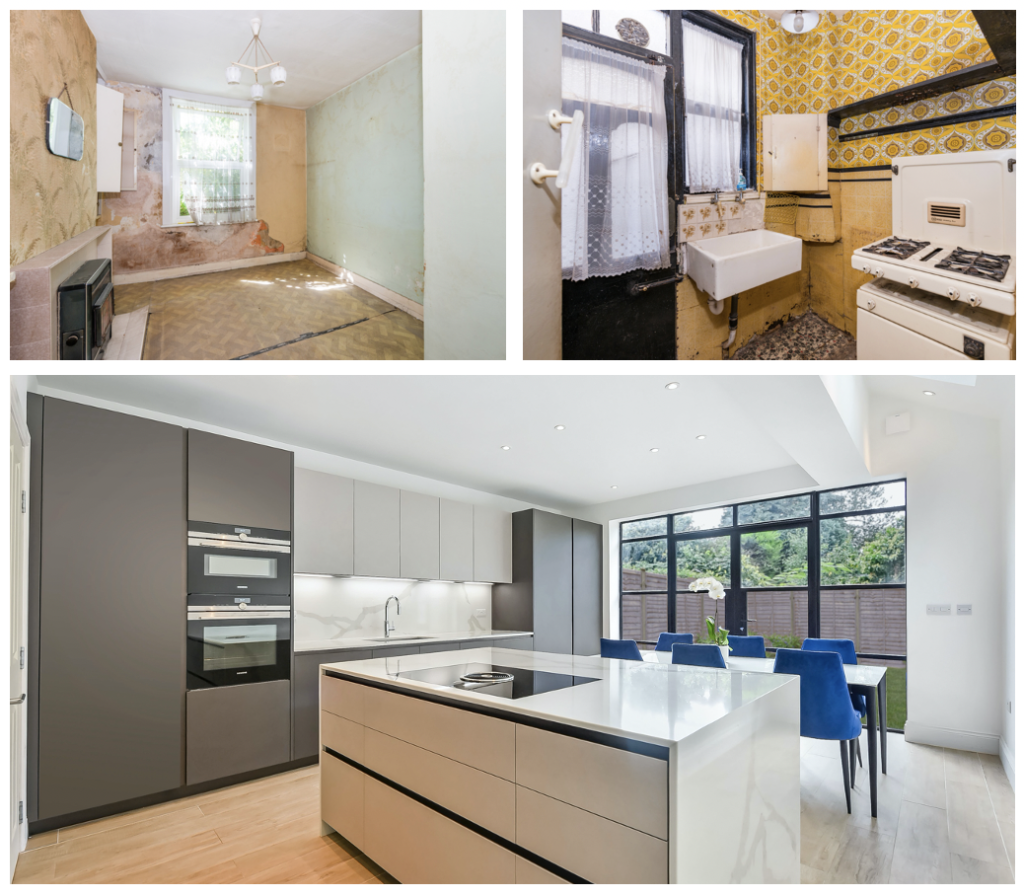
Before and after: take a look at this kitchen extension project
A wrap-around extension combines a side return and a rear extension, creating an L-shaped or U-shaped kitchen.
Before: A small, poorly configured kitchen with limited space and functionality.
After: A large, open-plan kitchen with distinct zones for cooking, dining, and socializing. This design maximizes space and creates a highly functional and versatile living area.
Key Feature: This option is ideal for those who want to completely reconfigure their ground floor layout.
4. The Glazed Extension: Flooding the Space with Light
A glazed extension, often referred to as a glass box extension, uses large expanses of glass to create a bright and airy space.
Before: A dark and cramped kitchen with limited natural light.
After: A light-filled kitchen that feels spacious and connected to the outdoors. This design can be used for side return or rear extensions.
Key Feature: Glass roofs and walls create a stunning visual impact and maximize natural light.
5. The Lean-To Extension: Cost-Effective Expansion
A lean-to extension is a simple and cost-effective way to add space to a small kitchen.
Before: A basic, small kitchen with limited space.
After: A simple extension with a sloped roof, that can add needed square footage. This option is often used for side or rear extensions.
Key Feature: The sloped roof is simple to construct, making it a budget-friendly option.
Interior Design Considerations: Optimizing Small Spaces
Once the extension is built, interior design plays a crucial role in maximizing the space:
1. Open-Plan Layouts: Creating a Sense of Spaciousness
Open-plan layouts eliminate walls and create a seamless flow between the kitchen, dining, and living areas.
This removes the feeling of being closed in.
2. Clever Storage Solutions: Maximizing Every Inch
Utilize vertical space with tall cabinets, open shelving, and pull-out drawers.
Under cabinet lighting will also help with visibility.
3. Light and Bright Colors: Enhancing Natural Light
Choose light colors for walls, cabinets, and countertops to reflect light and create a sense of spaciousness.
White, cream, and pale grays are excellent choices.
4. Integrated Appliances: Streamlining the Space
Integrated appliances create a seamless and uncluttered look.
Choose furniture that serves multiple purposes, such as a dining table that doubles as a workspace.
Foldable or stackable furniture will also increase the usable space when needed.
6. Effective Lighting: Creating Ambiance and Functionality
Use a combination of ambient, task, and accent lighting to create a well-lit and inviting space.
Pendant lights, recessed lighting, and under-cabinet lighting are all essential.
7. Reflective Surfaces: Bouncing Light Around the Room
Glossy surfaces, mirrors, and metallic accents can help bounce light around the room, making it feel brighter and more spacious.
Before and After: Real-Life Transformations
To truly appreciate the impact of a small kitchen extension, let’s examine some hypothetical “before and after” scenarios:
Scenario 1: The Cramped Galley Kitchen
Before: A narrow galley kitchen with limited counter space, dark cabinets, and poor natural light. The kitchen felt cramped and cluttered.
After: A side return extension created a wider kitchen with a breakfast bar, light-colored cabinets, and skylights. The kitchen now feels bright, spacious, and functional.
Scenario 2: The Dark and Dated Kitchen
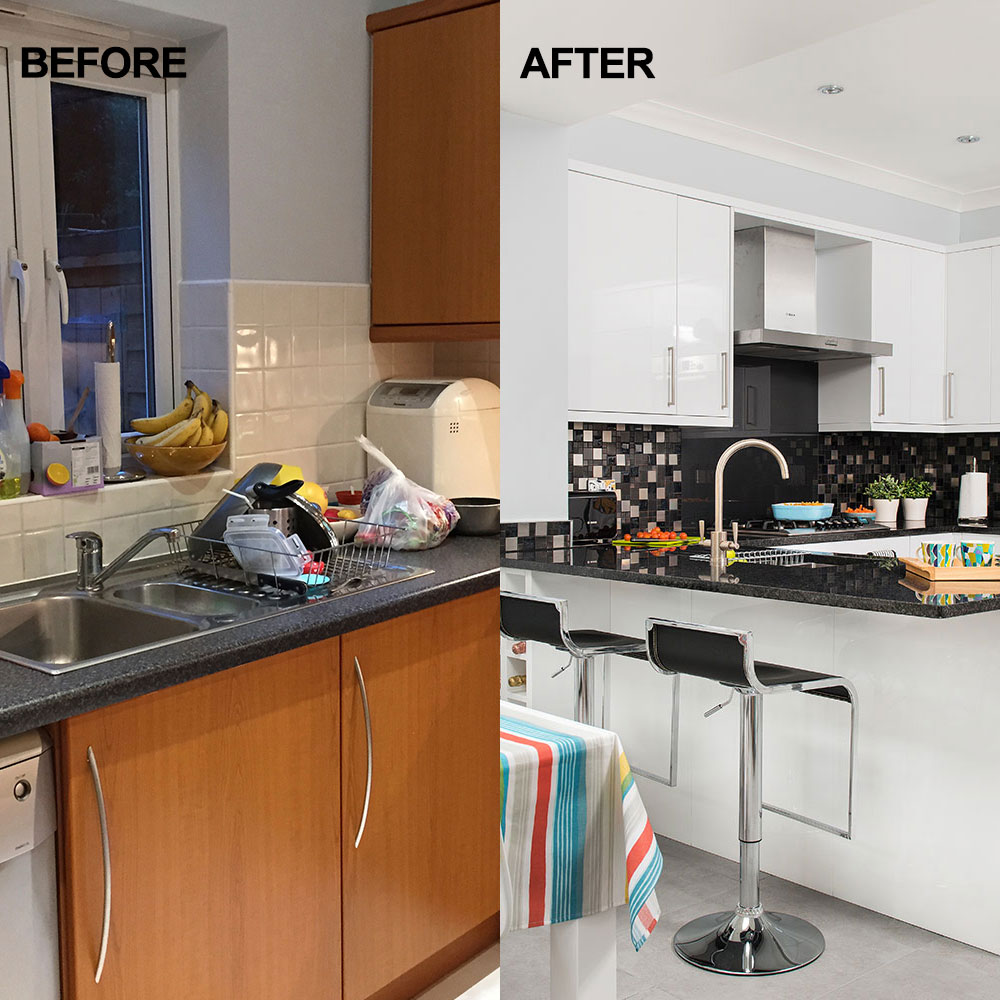
Before: A small, dated kitchen with dark wood cabinets, a laminate countertop, and a single small window. The kitchen felt gloomy and uninviting.
After: A rear extension with bi-fold doors created a light-filled kitchen with a modern design. White shaker cabinets, quartz countertops, and stainless steel appliances created a bright and airy space.
Scenario 3: The Unused Side Passage
Before: A small, cramped kitchen with an unused side passage.
After: A wrap-around extension that incorporated the side passage and extended to the rear. The kitchen now features a large island, a dining area, and direct access to the garden.
Conclusion: Transforming Your Kitchen Dreams into Reality
A small kitchen extension can dramatically transform your home, creating a functional, stylish, and inviting space. By carefully planning and considering the various design options, you can maximize your available space and create a kitchen that perfectly suits your needs and lifestyle. Remember to prioritise natural light, clever storage solutions, and an open-plan layout to create a sense of spaciousness. With the right approach, your small kitchen can become the heart of your home.

:max_bytes(150000):strip_icc()/jessicanelsonsubwaytile-722c281ca95548f0a6275bf1f03152f7-a47170a417f44411b720f0b204df427b.jpg?resize=200,135&ssl=1 "Inspiring Bathroom Tub Shower Tile Ideas")


