
Absolutely! Let’s craft a comprehensive 3000-word article on basement bedroom color ideas, formatted with `
` and `
` tags in place of “.
Basements often get a bad rap—dark, damp, and uninviting. But with the right color palette, your basement bedroom can become a cozy and stylish retreat. Choosing the right colors is crucial, as they can significantly impact the perceived size, brightness, and overall atmosphere of your subterranean space. This article delves into a range of basement bedroom color ideas, exploring how to maximize light, create warmth, and craft a personalized sanctuary.

Before diving into specific colors, it’s essential to understand the unique challenges of basement bedrooms. Natural light is often limited, and the space may feel inherently cooler. Understanding color psychology can help you select hues that counteract these issues.
The Importance of Light Reflectance
Basements crave light. Colors with high light reflectance values (LRVs) bounce light around the room, making it feel brighter and more spacious. Think about how a dark color absorbs light, while a lighter color reflects it.
Color Psychology: Setting the Mood
Colors evoke specific emotions. Warm colors like yellows and oranges can create a cozy atmosphere, while cool colors like blues and greens can promote relaxation. Understanding these effects will help you tailor your color scheme to your desired mood.

To combat the lack of natural light, bright and airy color palettes are often the best choice for basement bedrooms.
Crisp Whites and Creams
White is the ultimate light reflector, making it a classic choice for basement bedrooms.
Pure White: Maximizing Light
A pure white palette reflects the most light and creates a clean, minimalist aesthetic. It’s ideal for small or windowless basement bedrooms.
Soft Creams and Off-Whites: Adding Warmth
Creams and off-whites offer the brightness of white with a touch of warmth. They can prevent the space from feeling sterile and create a more inviting atmosphere.
Pastel Perfection
Pastel colors are light and airy, adding a subtle touch of color without overwhelming the space.
Pale Blues: Serene and Calming
Pale blues evoke a sense of tranquility and can make the room feel more spacious. They are perfect for creating a relaxing retreat.
Soft Greens: Bringing the Outdoors In
Soft greens mimic the natural world and can add a refreshing touch to your basement bedroom. They promote a sense of calm and well-being.
Light Yellows: Infusing Sunshine
Light yellows add a cheerful and uplifting vibe to the room. They can brighten up even the darkest corners and create a warm, inviting atmosphere.
For those seeking a more intimate and cozy feel, warm color palettes can transform a basement bedroom into a snug retreat.
Earthy Neutrals
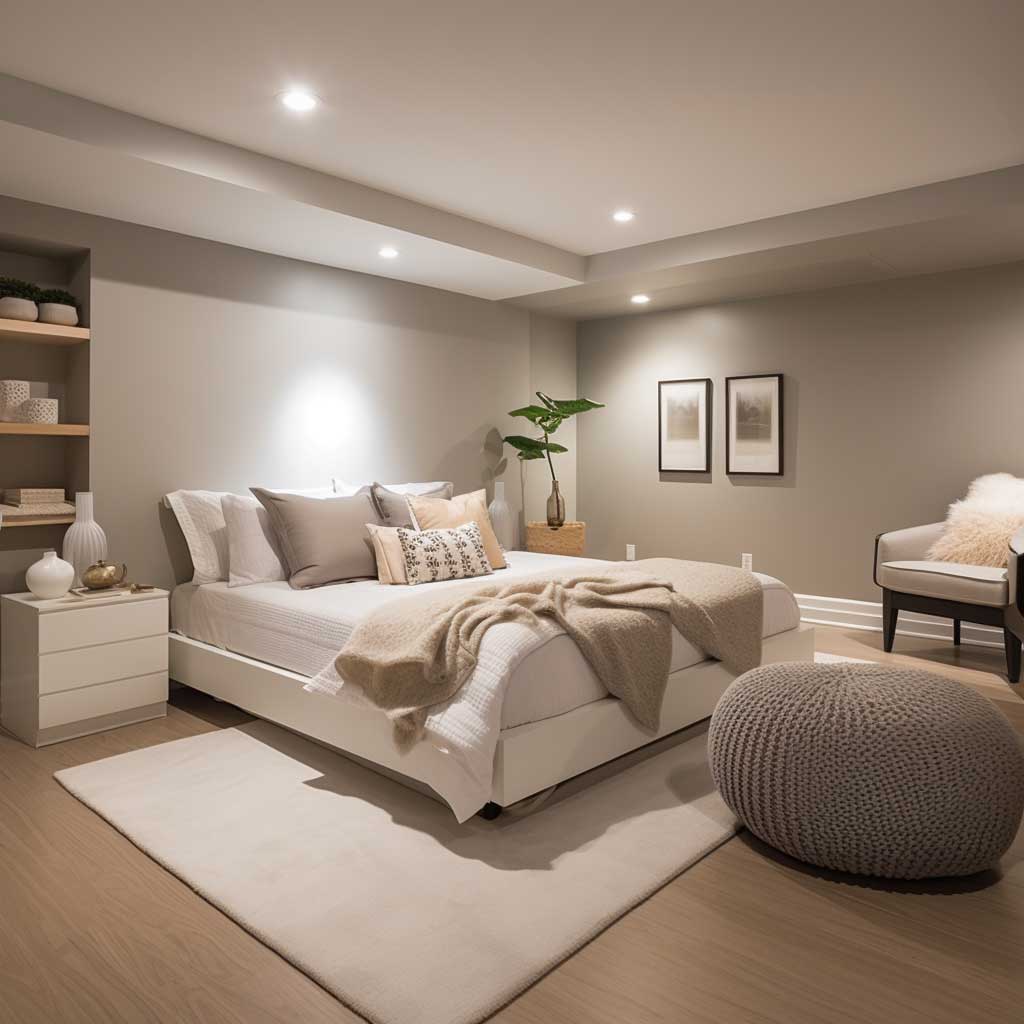
Earthy neutrals like beige, taupe, and warm grays create a grounded and comforting atmosphere.
Beige and Taupe: Timeless Comfort
Beige and taupe are versatile neutrals that provide a warm and inviting backdrop. They pair well with various textures and styles.
Warm Grays: Sophisticated Warmth
Warm grays offer a sophisticated alternative to cool grays. They add depth and richness to the space while maintaining a cozy feel.
Rich Jewel Tones
Jewel tones like deep reds, emerald greens, and sapphire blues can add a touch of luxury and create a dramatic effect.
Deep Reds: Creating Drama
Deep reds add warmth and drama to the space. They are best used as accent colors or on a feature wall to avoid overwhelming the room.
Emerald Greens: Lush and Inviting
Emerald greens bring a sense of nature and luxury to the basement bedroom. They create a rich and inviting atmosphere.
Sapphire Blues: Elegant Depth
Sapphire blues add depth and elegance to the space. They create a calming yet sophisticated atmosphere.
Basement bedrooms often present unique challenges that require careful color selection.
Low Ceilings: Creating Vertical Space
Low ceilings can make a basement bedroom feel cramped. Vertical stripes or a lighter ceiling color can create the illusion of height.
Vertical Stripes: Extending the Walls
Vertical stripes on the walls draw the eye upward, making the ceiling appear higher.
Lighter Ceiling Colors: Lifting the Space
A lighter ceiling color reflects light and visually lifts the space.
Lack of Natural Light: Maximizing Artificial Light
Compensating for the lack of natural light is crucial. Bright, reflective colors and strategic lighting are essential.
Reflective Finishes: Bouncing Light
Semi-gloss or gloss finishes on walls and ceilings can help bounce artificial light around the room.
Strategic Lighting: Layering Light Sources
Layering different light sources, such as overhead lighting, table lamps, and floor lamps, can brighten up the space.
Dampness and Moisture: Choosing Moisture-Resistant Paints
Basements are prone to dampness and moisture, so choosing moisture-resistant paints is essential.
Moisture-Resistant Paints: Preventing Mold and Mildew
Paints with mold and mildew inhibitors can help protect the walls from moisture damage.
Proper Ventilation: Maintaining Airflow
Ensuring proper ventilation can help prevent moisture buildup and maintain a healthy environment.
Creating a cohesive color scheme involves selecting complementary colors and accent hues.
Monochromatic Schemes
Monochromatic schemes use different shades and tints of a single color to create a harmonious look.
Varying Shades: Adding Depth
Using varying shades of the same color can add depth and dimension to the space.
Textural Elements: Breaking Up Monotony
Incorporating different textures, such as rugs, throws, and pillows, can prevent a monochromatic scheme from feeling flat.
Complementary Colors
Complementary colors are opposite each other on the color wheel, creating a vibrant contrast.
Blue and Orange: Dynamic Contrast
Blue and orange create a dynamic and energetic contrast.
Yellow and Purple: Bold and Vibrant
Yellow and purple offer a bold and vibrant contrast.
Analogous Colors
Analogous colors are next to each other on the color wheel, creating a harmonious and cohesive look.
Blue and Green: Calm and Serene
Blue and green create a calm and serene atmosphere.
Yellow and Orange: Warm and Inviting
Yellow and orange offer a warm and inviting feel.
Ultimately, the best color scheme is one that reflects your personal style and preferences.
Consider Your Style
Whether you prefer a minimalist, bohemian, or traditional style, your color choices should reflect your taste.
Incorporate Personal Touches
Add personal touches, such as artwork, photographs, and decorative items, to make the space feel like your own.
Experiment with Color
Don’t be afraid to experiment with different colors and combinations. Use paint swatches and test patches to see how colors look in your space.
Transforming a basement bedroom into a stylish and inviting retreat is achievable with the right color palette. By understanding the challenges of basement spaces, considering color psychology, and selecting colors that maximize light and create the desired mood, you can create a personalized sanctuary that you’ll love. Remember to choose colors that reflect your personal style and create a space that feels comfortable and inviting. With careful planning and thoughtful execution, your basement bedroom can become a bright, cozy, and stylish haven.
:max_bytes(150000):strip_icc()/jessicanelsonsubwaytile-722c281ca95548f0a6275bf1f03152f7-a47170a417f44411b720f0b204df427b.jpg?resize=200,135&ssl=1 "Inspiring Bathroom Tub Shower Tile Ideas")


