:max_bytes(150000):strip_icc()/KMI-8_10_21-E-3-e029de123eca47b5baab67bdb6bf7214.jpeg?ssl=1 "Double The Function: Kitchen Double Island Ideas")
The Culinary Crown Jewel: Mastering the Double Island kitchen
The kitchen, traditionally the heart of the home, has evolved into a multi-functional space, a hub for family gatherings, entertainment, and culinary creativity. In this pursuit of enhanced functionality and aesthetic appeal, the double island kitchen has emerged as a coveted design trend. It’s more than just a statement; it’s a strategic approach to optimizing space, flow, and social interaction within the kitchen.
This comprehensive guide delves into the intricacies of double island kitchen design, exploring various layouts, material choices, functionality considerations, and styling tips to help you create a culinary masterpiece.
Understanding the Appeal of Double Islands
:max_bytes(150000):strip_icc()/KMI-8_10_21-E-3-e029de123eca47b5baab67bdb6bf7214.jpeg "image.title")
Why opt for two islands instead of one? The answer lies in the versatility and enhanced functionality they offer.
Enhanced Functionality and Zoning
A double island setup allows for clear zoning within the kitchen. One island can be dedicated to food preparation, featuring a sink, cooktop, and ample counter space, while the other can serve as a social hub, with seating, a beverage center, or even a secondary sink. This separation streamlines workflow, preventing congestion and allowing multiple people to work simultaneously.
Increased Counter Space and Storage
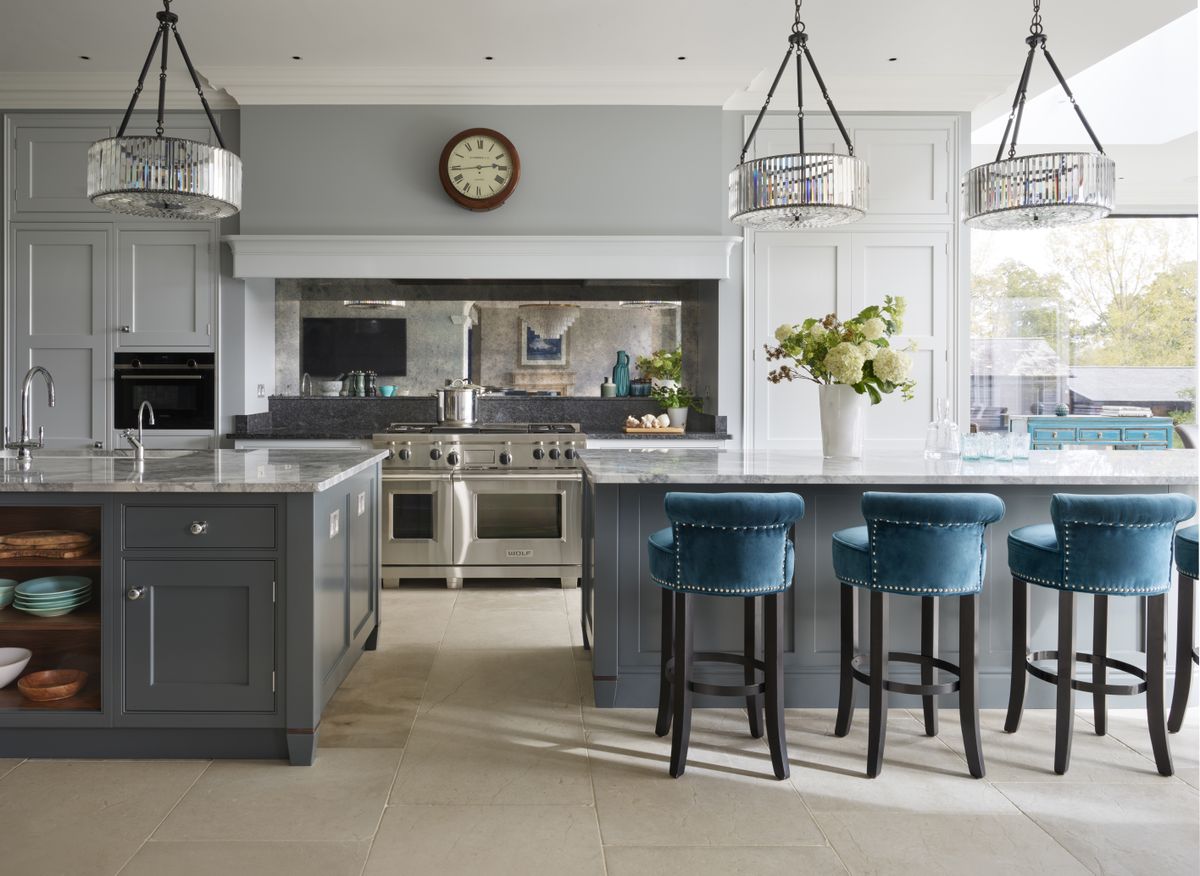
Double islands inherently provide a significant increase in counter space, crucial for ambitious cooks and large families. They also offer double the storage potential, accommodating everything from cookware and appliances to pantry items and serving ware.
Social Interaction and Entertainment
The double island design facilitates seamless social interaction. One island can act as a natural gathering point for guests, allowing them to converse with the cook without obstructing the work area. This is particularly beneficial for entertaining, as it creates a central hub for food and drink preparation and serving.
Architectural Impact and Visual Appeal
Double islands create a striking architectural statement, adding a sense of grandeur and sophistication to the kitchen. They can be designed to complement the overall aesthetic of the home, whether it’s modern, traditional, or transitional.
Planning Your Double Island Layout
The success of a double island kitchen hinges on careful planning and layout design.
Space Considerations
Double islands require a substantial amount of space. A minimum kitchen width of 15-18 feet is generally recommended to ensure adequate clearance between islands and surrounding cabinetry. The distance between the islands themselves should ideally be at least 42-48 inches to allow for comfortable movement.
Parallel Islands
This is the most common layout, with two islands placed parallel to each other. One island is typically dedicated to food preparation, while the other serves as a social or dining space. This layout works well in long, rectangular kitchens.
Galley-Style with Double Islands
In a galley-style layout, the islands are placed opposite each other, creating a central walkway. This layout is ideal for narrow kitchens, as it maximizes space utilization and creates a streamlined workflow.
L-Shaped Islands
This layout features one island in a traditional rectangular shape and the other in an L-shape, creating a more dynamic and visually interesting space. This design can be used to delineate different zones within the kitchen.
Offset Islands
Offset islands are placed at slightly different angles, creating a more relaxed and informal feel. This layout can be used to break up a large space and create distinct zones.
Material Choices: Balancing Function and Aesthetics
The materials you choose for your double islands will significantly impact their functionality and aesthetic appeal.
Countertops
Quartz: Durable, non-porous, and available in a wide range of colors and patterns.
Cabinetry
Wood: Classic and timeless, available in a variety of finishes and styles.
Flooring
Hardwood: Warm and inviting, but can be susceptible to water damage.
Functionality Considerations: Optimizing Workflow
To maximize the functionality of your double island kitchen, consider the following:
Sink Placement
At least one island should feature a sink, ideally located within the food preparation zone. A secondary sink on the social island can be beneficial for entertaining.
Cooktop or Range Placement
If one island is dedicated to cooking, it should feature a cooktop or range. Ensure adequate ventilation with a powerful range hood.
Appliance Integration
Consider integrating appliances such as a dishwasher, refrigerator drawers, or wine cooler into the islands to enhance functionality and streamline workflow.
Seating and Dining
If one island is intended for dining, ensure adequate overhang for comfortable seating. Bar stools or counter stools are popular choices.
Lighting
Proper lighting is crucial for both functionality and ambiance. Consider pendant lights over the islands, recessed lighting for general illumination, and under-cabinet lighting for task lighting.
Power Outlets
Ensure an ample number of power outlets on both islands for appliances and charging devices. Consider pop-up outlets for a clean and seamless look.
Styling Tips: Creating a Cohesive Look
To create a cohesive and visually appealing double island kitchen, consider the following styling tips:
Consistent Design Elements
Maintain consistency in design elements such as countertop materials, cabinetry finishes, and hardware.
Focal Points
Create focal points by incorporating statement lighting fixtures, unique backsplashes, or eye-catching artwork.
Color Palette
Choose a cohesive color palette that complements the overall aesthetic of your home. Consider using a mix of neutral and accent colors.
Texture and Pattern
Introduce texture and pattern through materials such as natural stone, wood, or textured tile.
Personal Touches
Add personal touches such as family photos, artwork, or decorative objects to reflect your style and personality.
Double Island Variations and Specializations
The double island design can be adapted to various kitchen needs and preferences.
The Baking Island
One island can be dedicated to baking, featuring a marble countertop, specialized baking tools, and ample storage for baking supplies.
The Beverage Center
One island can be transformed into a beverage center, featuring a wine cooler, ice maker, and coffee station.
The Prep Island
One island can be exclusively for food preparation, with multiple sinks, cutting boards, and specialized storage for knives and utensils.
The Social Island
One island can serve as a dedicated social space, with comfortable seating, a built-in bar, and a television.
Conclusion: The Ultimate Kitchen Upgrade
The double island kitchen is a testament to the evolving role of the kitchen in modern homes. It’s a space that seamlessly blends functionality, social interaction, and aesthetic appeal. By carefully planning the layout, selecting appropriate materials, and incorporating thoughtful design elements, you can create a culinary crown jewel that elevates your home and lifestyle. The double island kitchen is more than a trend; it’s an investment in the heart of your home, a space where memories are made and culinary dreams come to life.
:max_bytes(150000):strip_icc()/jessicanelsonsubwaytile-722c281ca95548f0a6275bf1f03152f7-a47170a417f44411b720f0b204df427b.jpg?resize=200,135&ssl=1 "Inspiring Bathroom Tub Shower Tile Ideas")


:max_bytes(150000):strip_icc()/KMI-8_10_21-E-3-e029de123eca47b5baab67bdb6bf7214.jpeg?ssl=1&description=Double%20The%20Function%3A%20Kitchen%20Double%20Island%20Ideas)