Absolutely! Here’s a 3000-word article focusing on simple, no-grass backyard landscaping ideas, structured with headings for clarity and readability.
Simple Backyard Landscaping Ideas: Ditch the Grass, Embrace the Beauty
Tired of endless mowing, watering, and fertilizing? Dreaming of a low-maintenance, yet stunning backyard oasis? You’re not alone. Many homeowners are ditching traditional lawns in favor of creative, no-grass landscaping solutions. This article explores a variety of simple backyard landscaping ideas that can transform your outdoor space into a beautiful, functional, and eco-friendly haven.
1. Embracing the Gravel Garden: A Rustic Charm
No-Grass Backyard Ideas for a Relaxing Lifestyle
Gravel gardens are a fantastic low-maintenance option that offers a rustic, natural aesthetic. They’re perfect for dry climates and can be customized to fit any style.
Selecting the Right Gravel
Pea Gravel: Smooth, rounded stones that are comfortable to walk on. Ideal for pathways and seating areas.
Crushed Stone: Angular stones that interlock, providing a stable surface. Suitable for driveways and high-traffic areas.
Decomposed Granite: Fine, granular material that creates a natural, earthy look. Excellent for informal pathways and ground cover.
Choosing Color: Choose gravel colors that complement your home’s exterior and existing landscaping. Natural tones like grays, browns, and tans blend seamlessly.
Creating a Gravel Garden
Preparation: Clear the area of grass and weeds. Level the ground and install a weed barrier to prevent unwanted growth.
Edging: Define the boundaries of your gravel garden with edging materials like metal, stone, or wood. This will keep the gravel contained and create a clean, polished look.
Laying the Gravel: Spread the gravel evenly to a depth of 2-4 inches. Compact the gravel for a stable surface.
Planting: Incorporate drought-tolerant plants like succulents, ornamental grasses, and Mediterranean herbs. Create planting pockets within the gravel to add visual interest.
2. The Allure of Patios and Pavers: Functional Elegance
No-Grass Backyard Ideas for a Relaxing Lifestyle
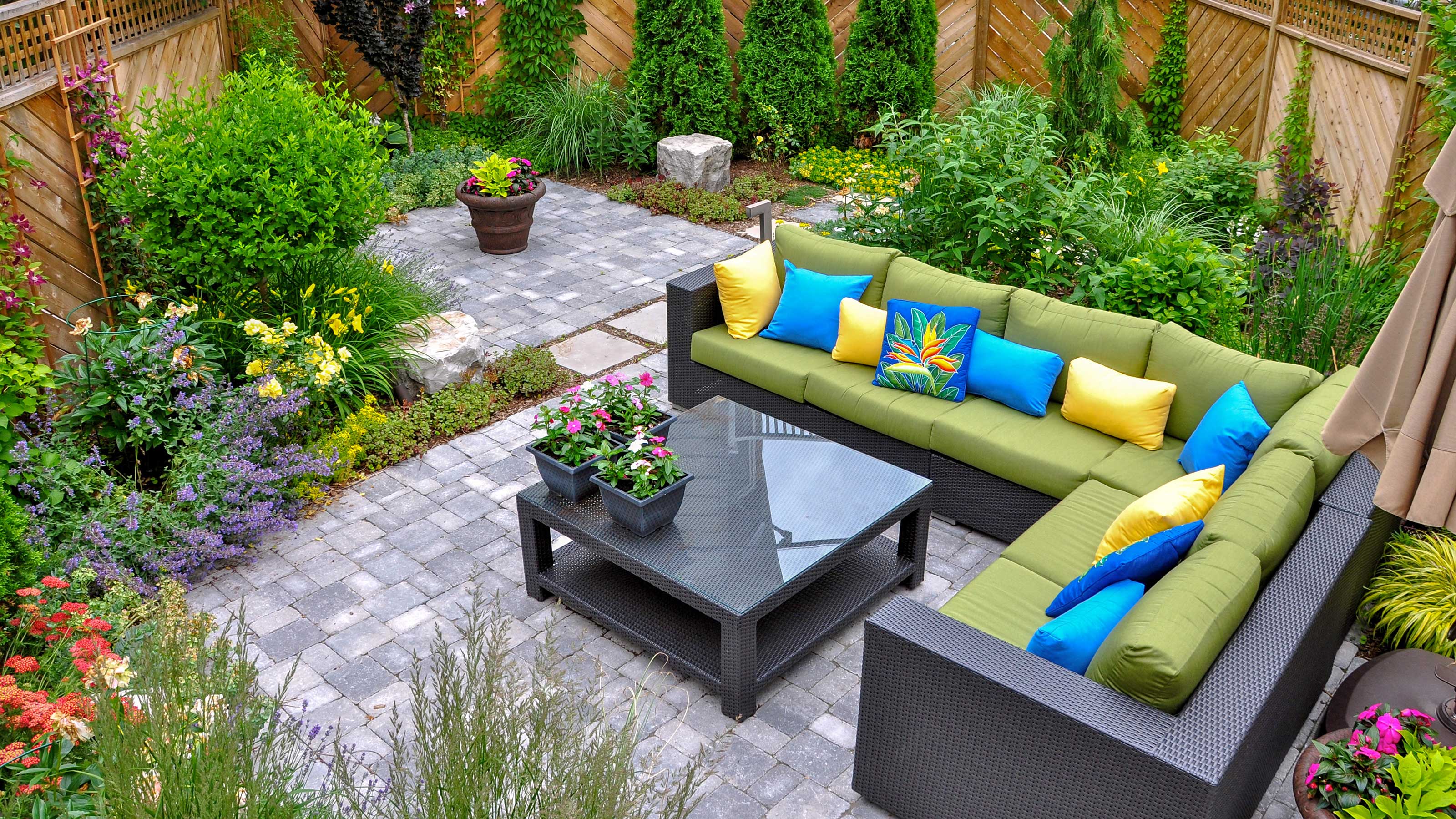
Patios and paver pathways provide a solid, level surface for outdoor living and entertaining. They offer a wide range of design possibilities and can be customized to fit any budget.
Choosing Paver Materials
Concrete Pavers: Durable and versatile, available in a variety of shapes, sizes, and colors. Cost-effective and easy to install.
Brick Pavers: Classic and timeless, offering a warm, traditional look. Durable and long-lasting.
Natural Stone Pavers: Luxurious and unique, providing a natural, organic feel. Options include flagstone, bluestone, and travertine.
Porcelain Pavers: Modern and sleek, highly durable, frost resistant, and low maintenance.
Designing Your Patio or Pathway
Layout: Consider the size and shape of your space. Plan the layout to maximize functionality and create a cohesive design.
Pattern: Experiment with different paver patterns to create visual interest. Herringbone, running bond, and basketweave are popular choices.
Borders: Define the edges of your patio or pathway with a contrasting border.
Permeable Pavers: Consider using permeable pavers to allow rainwater to filter back into the ground, reducing runoff.
3. The Beauty of Mulch and Ground Covers: Natural Textures
Cheap no-grass backyard ideas: low-maintenance looks for your
Mulch and ground covers offer a natural, low-maintenance alternative to grass. They help retain moisture, suppress weeds, and add texture to your landscape.
Selecting Mulch
Wood Mulch: Shredded bark or wood chips that provide a natural, rustic look. Decomposes slowly, adding nutrients to the soil.
Pine Straw: Needles from pine trees that create a soft, textured surface. Acidic, making it ideal for acid-loving plants.
Rubber Mulch: Made from recycled tires, durable and long-lasting. Provides a soft, resilient surface.
Rock Mulch: Small stones or pebbles that provide excellent drainage and weed suppression. Ideal for dry climates.
Choosing Ground Covers
Creeping Thyme: Fragrant and drought-tolerant, forms a dense mat of foliage. Ideal for pathways and rock gardens.
Sedum: Succulent ground cover that thrives in dry, sunny conditions. Available in a variety of colors and textures.
Ajuga: Low-growing ground cover with attractive foliage and flowers. Tolerates shade and moist soil.
Vinca Minor: Evergreen ground cover with glossy leaves and blue flowers. Thrives in shade and tolerates a variety of soil conditions.
4. The Zen of a Rock Garden: Serene Simplicity
Rock gardens create a tranquil, natural environment that requires minimal maintenance. They’re perfect for sloped areas and can be customized to fit any style.
Selecting Rocks
Natural Stone: Choose rocks that are native to your area for a natural look. Vary the size and shape of the rocks to create visual interest.
Arrangement: Arrange the rocks in a natural, random pattern. Create pockets for planting.
Planting: Select drought-tolerant plants that thrive in rocky conditions, such as succulents, alpine plants, and ornamental grasses.
Creating a Rock Garden
Slope: If your yard has a slope, utilize it for a natural rock garden. Terracing can help create planting pockets.
Drainage: Ensure proper drainage to prevent waterlogging.
Soil: Use a well-draining soil mix that is suitable for rock garden plants.
5. The Charm of a Deck or Raised Platform: Elevated Living
Decks and raised platforms create a level surface for outdoor living and entertaining. They offer a variety of design possibilities and can be customized to fit any space.
Choosing Decking Materials
Wood: Natural wood like cedar or redwood offers a warm, traditional look. Requires regular maintenance.
Composite Decking: Made from recycled materials, durable and low-maintenance. Available in a variety of colors and textures.
PVC Decking: Durable and weather-resistant, requires minimal maintenance. Available in a variety of colors and styles.
Designing Your Deck or Platform
Size and Shape: Consider the size and shape of your space. Plan the layout to maximize functionality and create a cohesive design.
Levels: Create different levels to add visual interest and define separate areas.
Railings: Choose railings that complement your deck’s design and provide safety.
Shade: Incorporate shade structures like pergolas or awnings to create a comfortable outdoor living space.
6. The Art of Xeriscaping: Sustainable Beauty
Xeriscaping is a water-wise landscaping approach that utilizes drought-tolerant plants and efficient irrigation techniques. It’s perfect for dry climates and can help conserve water.
Selecting Xeriscape Plants
Native Plants: Choose plants that are native to your area, as they are adapted to the local climate and soil conditions.
Drought-Tolerant Plants: Select plants that can withstand dry conditions, such as succulents, ornamental grasses, and Mediterranean herbs.
Zoning: Group plants with similar water needs together to optimize irrigation.
Xeriscaping Techniques
Soil Preparation: Improve soil drainage and water-holding capacity by adding organic matter.
Mulching: Use mulch to retain moisture and suppress weeds.
Efficient Irrigation: Install a drip irrigation system to deliver water directly to plant roots.
Water Harvesting: Consider installing rain barrels to collect rainwater for irrigation.
7. The Joy of Container Gardening: Versatile and Vibrant
Container gardening offers a flexible and versatile way to add greenery and color to your backyard. It’s perfect for small spaces and allows you to customize your landscape.
Selecting Containers
Material: Choose containers made from durable materials like terracotta, ceramic, or plastic.
Size: Select containers that are appropriate for the size of your plants.
Drainage: Ensure that your containers have drainage holes to prevent waterlogging.
Choosing Plants
Variety: Select a variety of plants with different colors, textures, and heights to create visual interest.
Sunlight: Choose plants that are suitable for the amount of sunlight your backyard receives.
Grouping: Group plants with similar water and light requirements together.
Conclusion: Your Backyard Oasis Awaits
Ditching the grass doesn’t mean sacrificing beauty or functionality. With a little creativity and planning, you can transform your backyard into a low-maintenance, stunning oasis. Whether you choose a gravel garden, a paver patio, or a xeriscape landscape, the possibilities are endless. Embrace the beauty of no-grass landscaping and create a backyard that you’ll love for years to come.
:strip_icc()/above-view-patio-garden-landscaping-7f021f9b-b1dd80c42a9c482d84e4bc7d4f5cb905.jpg?ssl=1 "Simple Backyard Landscaping Ideas: No Grass Required")
:strip_icc()/above-view-patio-garden-landscaping-7f021f9b-b1dd80c42a9c482d84e4bc7d4f5cb905.jpg "image.title")
:strip_icc()/raised-wooden-deck-shade-blue-umbrella-1yEfji5HKMjBc_LMqvuTp6-ef4e8659e5704000a68fc3262ae0ecdc.jpg "image.title")
:max_bytes(150000):strip_icc()/jessicanelsonsubwaytile-722c281ca95548f0a6275bf1f03152f7-a47170a417f44411b720f0b204df427b.jpg?resize=200,135&ssl=1 "Inspiring Bathroom Tub Shower Tile Ideas")


:strip_icc()/above-view-patio-garden-landscaping-7f021f9b-b1dd80c42a9c482d84e4bc7d4f5cb905.jpg?ssl=1&description=Simple%20Backyard%20Landscaping%20Ideas%3A%20No%20Grass%20Required)